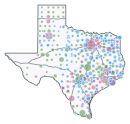
148 Warrant Service 56 Jail Enforcement 345 Task Force
Texas has 445 agencies in the program, 36% of its local agencies, covering 7.3 million people.
Summary generated with PromptQL
In Texas, an ICE summer operation in the Lewisville Lake area, carried out with support from state and local agencies, produced 121 arrests. The operation shows how cooperation between ICE and local law enforcement can extend federal immigration enforcement into public-safety activity within communities.
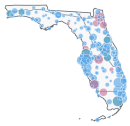
64 Warrant Service 10 Jail Enforcement 279 Task Force
Florida has 289 agencies in the program, 79% of its local agencies, covering 20.3 million people.
Summary generated with PromptQL
Florida expanded its use of 287(g) partnerships between local law enforcement and ICE, alongside increased immigration arrests and federal funding for participating agencies. The expansion has brought scrutiny to how local jails handle people held for ICE and prompted calls in Florida communities to end or reconsider cooperation.
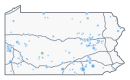
3 Warrant Service 141 Task Force
Pennsylvania has 144 agencies in the program, 5% of its local agencies, covering 438,600 people.
Summary generated with PromptQL
Pennsylvania’s local cooperation with ICE expanded through 287(g) agreements and jail arrangements, while ICE operations involving local law enforcement produced significant arrests. The state’s enforcement landscape remains divided, with some local agencies defending or joining ICE partnerships and others restricting, rejecting or challenging cooperation.
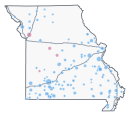
13 Warrant Service 4 Jail Enforcement 141 Task Force
Missouri has 143 agencies in the program, 24% of its local agencies, covering 1.4 million people.
Summary generated with PromptQL
Missouri has expanded cooperation between state and local law enforcement and ICE through a statewide 287(g) framework, while additional local agencies have joined or pursued agreements. The expansion has increased the role of Missouri jails and local officers in immigration enforcement and prompted disputes over detention capacity, accountability and oversight.
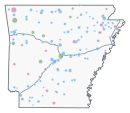
43 Warrant Service 13 Jail Enforcement 123 Task Force
Arkansas has 142 agencies in the program, 40% of its local agencies, covering 1.3 million people.
Summary generated with PromptQL
Arkansas expanded cooperation between local law enforcement and ICE through a 2025 state mandate and a broad set of 287(g) agreements, while counties created funds to support participating agencies. The arrangements have produced local detainers and immigration-enforcement activity alongside public opposition and litigation, with the responsibilities of each agency depending on its agreement.
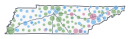
83 Warrant Service 9 Jail Enforcement 71 Task Force
Tennessee has 128 agencies in the program, 32% of its local agencies, covering 3.2 million people.
Summary generated with PromptQL
Tennessee has rapidly expanded its 287(g) cooperation with ICE, reaching 120 participating agencies by September and recording more than 1,300 arrests by those partners since January 2025. A state law requires county sheriff’s offices to enter agreements by January 1, 2027, while the arrangements have broadened from jail-based work to warrant-service and task-force authority amid litigation and community opposition.
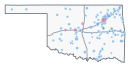
7 Warrant Service 5 Jail Enforcement 114 Task Force
Oklahoma has 118 agencies in the program, 28% of its local agencies, covering 745,300 people.
Summary generated with PromptQL
Oklahoma expanded cooperation between state and local law enforcement agencies and ICE through 287(g) agreements, contributing to more than 1,800 immigration-related arrests from January through July 2026. The arrangements have extended immigration-enforcement authority from jails and state patrol operations to local task forces, while records indicate that most people arrested had no criminal conviction and one major county proposal was rejected.
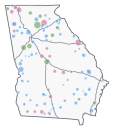
28 Warrant Service 21 Jail Enforcement 89 Task Force
Georgia has 111 agencies in the program, 20% of its local agencies, covering 2.1 million people.
Summary generated with PromptQL
Georgia saw local police-ICE cooperation broaden in 2026, with multiple police and sheriff's agencies entering or formalizing 287(g) agreements. The recorded developments include task-force authority for local officers and increased ICE-detainer activity in a county jail, extending federal immigration enforcement through local systems.
9 Warrant Service 6 Jail Enforcement 88 Task Force
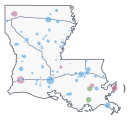
Louisiana has 94 agencies in the program, 28% of its local agencies, covering 1.2 million people.
Summary generated with PromptQL
The supplied Louisiana material does not establish a specific state, county, or municipal law-enforcement agency entering, leaving, or challenging a 287(g) or other local-police partnership with ICE. Because the reported Louisiana developments concern federal detention, deportation, or ICE facilities without a documented local-police cooperation hook, no qualifying beat is included.
9 Warrant Service 11 Jail Enforcement 77 Task Force
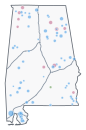
Alabama has 80 agencies in the program, 20% of its local agencies, covering 1 million people.
Summary generated with PromptQL
Alabama expanded cooperation between local law enforcement and ICE in 2026, including a 287(g) agreement with the state prison system and six municipal police departments, while one city later withdrew from the program. The record shows both the reach of local-federal immigration enforcement and documented consequences for people stopped by Alabama officers, including transfers to ICE custody and a deportation.
16 Warrant Service 3 Jail Enforcement 50 Task Force
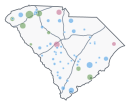
South Carolina has 62 agencies in the program, 25% of its local agencies, covering 2.3 million people.
Summary generated with PromptQL
South Carolina law-enforcement agencies have worked with ICE through 287(g) agreements and joint immigration-enforcement operations. The documented record also includes ICE detainers sought through county authorities and reported limits on cooperation, reflecting a mixed statewide pattern of participation and resistance.
6 Warrant Service 3 Jail Enforcement 58 Task Force
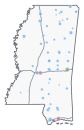
Mississippi has 60 agencies in the program, 20% of its local agencies, covering 640,200 people.
Summary generated with PromptQL
The submitted Mississippi reporting does not establish a qualifying local-police–ICE partnership or 287(g) development. Its other Mississippi stories concern detention conditions, state immigration measures, or federal court proceedings outside this brief’s local-police–ICE scope.
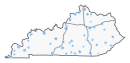
2 Warrant Service 3 Jail Enforcement 54 Task Force
Kentucky has 57 agencies in the program, 16% of its local agencies, covering 698,700 people.
Summary generated with PromptQL
Kentucky has seen a sharp expansion of local law-enforcement cooperation with ICE, with 55 agencies reported to have 287(g) agreements in 2026 and nearly 5,000 ICE arrests recorded since the start of the Trump administration. The expansion has increased the role of Kentucky jails in federal immigration enforcement while prompting scrutiny of detainer practices, detention conditions and access to medical care.
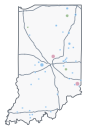
6 Warrant Service 3 Jail Enforcement 41 Task Force
Indiana has 47 agencies in the program, 6% of its local agencies, covering 193,300 people.
Summary generated with PromptQL
Indiana expanded cooperation between state and local law-enforcement agencies and ICE through a broad 287(g) network, alongside a five-day operation that resulted in 426 arrests statewide. The agreements give participating officers defined immigration-enforcement roles and have prompted both increased operational coordination and legal scrutiny of how local agencies cooperate with federal authorities.
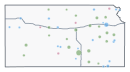
29 Warrant Service 4 Jail Enforcement 25 Task Force
Kansas has 47 agencies in the program, 13% of its local agencies, covering 312,700 people.
Summary generated with PromptQL
Kansas has a recorded network of local law-enforcement partnerships with ICE, and the attorney general has urged more agencies to assist with immigration operations. The September push, framed by state officials as a public-safety measure after a southwest Kansas killing, has put the scope of local participation in federal immigration enforcement at the center of the statewide debate.
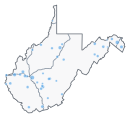
1 Warrant Service 42 Task Force
West Virginia has 43 agencies in the program, 18% of its local agencies, covering 728,200 people.
Summary generated with PromptQL
West Virginia state and local law-enforcement agencies partnered with ICE in a January operation that detained roughly 600 people, amid a reported increase in local arrests for ICE during 2026. The state later stopped holding ICE detainees in its jails, while county participation highlighted the scale of the partnership and scrutiny of federal financial incentives.
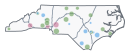
19 Warrant Service 3 Jail Enforcement 13 Task Force
North Carolina has 32 agencies in the program, 6% of its local agencies, covering 1.5 million people.
Summary generated with PromptQL
North Carolina has moved to expand cooperation between state and local law enforcement and ICE, including a state-law mandate and the Highway Patrol’s 287(g) Task Force agreement in September. The shift extends immigration-enforcement authority beyond jail settings into routine policing, while reported local operations and misconduct allegations have intensified scrutiny of how that cooperation is carried out.
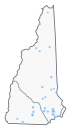
New Hampshire has 29 agencies in the program, 13% of its local agencies, covering 99,700 people.
Summary generated with PromptQL
New Hampshire’s local police–ICE partnerships expanded enforcement activity in 2026, with local agencies accounting for nearly half of 198 immigration detentions recorded in the state from May through July. State law protects local agencies’ ability to enter 287(g) agreements, while lawsuits and local decisions show continuing disputes over transparency, funding, and the role of police in federal immigration enforcement.
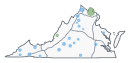
2 Warrant Service 20 Task Force
Virginia has 22 agencies in the program, 9% of its local agencies, covering 984,100 people.
Summary generated with PromptQL
Virginia’s 2026 effort to end or constrain state and local police cooperation with ICE has been checked in court, leaving existing 287(g) agreements in place while the legal challenge proceeds. The ruling preserves local participation in federal immigration enforcement and leaves a divided statewide landscape in which agencies’ cooperation practices and limits remain under public and legal scrutiny.
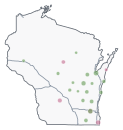
19 Warrant Service 5 Jail Enforcement
Wisconsin has 22 agencies in the program, 5% of its local agencies, covering 768,700 people.
Summary generated with PromptQL
Wisconsin reporting shows that ICE detention and the use of local jails increased in 2026 while cooperation between local law enforcement and ICE remained contested. Legislative and court challenges have left unresolved how Wisconsin sheriffs should handle 287(g) agreements and ICE detainers.
3 Warrant Service 1 Jail Enforcement 21 Task Force
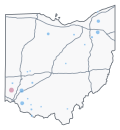
Ohio has 21 agencies in the program, 2% of its local agencies, covering 413,400 people.
Summary generated with PromptQL
Ohio’s local law-enforcement cooperation with ICE expanded in 2026 through new and existing 287(g) partnerships, including a task-force agreement with a central Ohio police department and county jail arrangements. The agreements give participating local officers or jail officials defined roles in federal immigration enforcement, making the scope and oversight of local–ICE cooperation a statewide issue.
3 Warrant Service 1 Jail Enforcement 17 Task Force
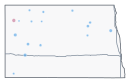
North Dakota has 17 agencies in the program, 15% of its local agencies, covering 92,700 people.
Summary generated with PromptQL
North Dakota reporting documents ICE cooperation with local law enforcement through Burleigh County sheriff assistance during Bismarck-area operations and county-jail detention of people held for immigration authorities. The documented activity shows a longstanding local-federal detention relationship being used amid increased enforcement, while available reporting does not establish a statewide expansion of 287(g) agreements.
11 Warrant Service 1 Jail Enforcement 5 Task Force
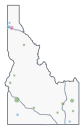
Idaho has 16 agencies in the program, 13% of its local agencies, covering 414,100 people.
Summary generated with PromptQL
In 2026, Idaho expanded documented cooperation between state and local law-enforcement agencies and ICE through 287(g) agreements covering prison warrant service and other supervised immigration functions. The expansion moves more immigration-enforcement coordination into Idaho agencies and local custody settings, while reported probation practices and joint operations have raised questions about oversight, accuracy and the boundaries of local police involvement.
8 Warrant Service 4 Jail Enforcement 8 Task Force
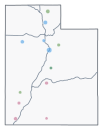
Utah has 15 agencies in the program, 11% of its local agencies, covering 394,000 people.
Summary generated with PromptQL
Law enforcement participation in the 287(g) program grew across Utah over the past year, bringing the statewide total to 13 participating agencies. The expansion of local cooperation with federal immigration authorities drew significant public pushback during county commission meetings and sparked transparency concerns as several departments declined to detail their enforcement operations.
2 Warrant Service 2 Jail Enforcement 12 Task Force
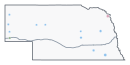
Nebraska has 14 agencies in the program, 7% of its local agencies, covering 40,800 people.
Summary generated with PromptQL
Nebraska expanded cooperation with ICE through a State Patrol arrangement and a 287(g) task-force agreement, while county officials also assisted ICE outside a formal contract. The developments show that ICE collaboration in Nebraska has operated through both formal delegated authority and informal information-sharing or custody arrangements, alongside legislative and public opposition to the state’s partnership.
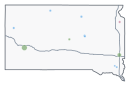
4 Warrant Service 2 Jail Enforcement 10 Task Force
South Dakota has 14 agencies in the program, 8% of its local agencies, covering 82,100 people.
Summary generated with PromptQL
South Dakota has expanded its cooperation with ICE through a Highway Patrol 287(g) agreement and continued state support for immigration-enforcement operations. In October, the governor extended National Guard administrative assistance through September 2027 and announced additional federal funding, while state officials reported hundreds of immigration-related arrests and more than 1,000 deportation cases processed since July 2025.
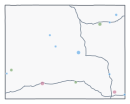
7 Warrant Service 2 Jail Enforcement 11 Task Force
Wyoming has 14 agencies in the program, 20% of its local agencies, covering 104,700 people.
Summary generated with PromptQL
Wyoming expanded cooperation between local law enforcement and ICE through 287(g) agreements, detainer transfers and jail cooperation, including authority for trained state troopers to act during traffic and commercial-vehicle enforcement. The arrangements have increased the reach of immigration enforcement while prompting documented concerns about criminal investigations, public procedure and legal authority, with challenges and reviews still unfolding statewide.
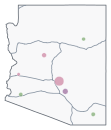
4 Warrant Service 5 Jail Enforcement 1 Task Force
Arizona has 9 agencies in the program, 8% of its local agencies, covering 1 million people.
Summary generated with PromptQL
Arizona's local immigration enforcement landscape is driven by the implementation of Proposition 314, a voter-approved measure empowering state and local police to arrest suspected unauthorized immigrants. While a federal judge allowed the state law to take effect for now, local 287(g) partnerships—which currently include 9 participating agencies statewide—have faced pushback elsewhere, highlighted by a court blocking a unilateral agreement in Pinal County and the state challenging federal funding conditions.
3 Warrant Service 1 Jail Enforcement 6 Task Force
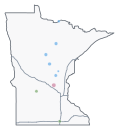
Minnesota has 9 agencies in the program, 2% of its local agencies, covering 197,400 people.
Summary generated with PromptQL
A federal judge has upheld Minnesota's local limits on immigration enforcement, striking down a Justice Department lawsuit that sought to force the state and several major jurisdictions to honor ICE detainers. Even as state and city leaders successfully defended their non-cooperation policies, sheriffs in eight rural Minnesota counties signed 287(g) agreements last year to partner with federal agents, sparking ongoing civil rights lawsuits and community pushback.
4 Warrant Service 4 Task Force
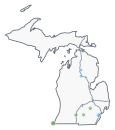
Michigan has 8 agencies in the program, 2% of its local agencies, covering 374,900 people.
Summary generated with PromptQL
Several Michigan law enforcement agencies have signed 287(g) agreements to assist federal immigration enforcement, drawing both new federal funding and organized community resistance. While jurisdictions like Livingston and Jackson counties adopted the Warrant Service Officer model, other local ICE partnerships have faced grassroots pushback, federal lawsuits, or cancellations due to staffing constraints.
3 Warrant Service 5 Task Force
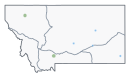
Montana has 8 agencies in the program, 6% of its local agencies, covering 125,000 people.
Summary generated with PromptQL
Montana’s documented local cooperation with federal immigration enforcement centers on Gallatin County’s 287(g) agreement, which was paused during litigation, while Helena adopted limits on police assistance to federal immigration agents. The disputes have produced state-level investigations and court challenges over how much authority Montana counties and cities must provide to federal immigration officials.
5 Warrant Service 1 Jail Enforcement
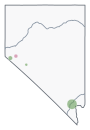
Nevada has 5 agencies in the program, 13% of its local agencies, covering 1.8 million people.
Summary generated with PromptQL
Nevada's local law enforcement partnerships with federal immigration authorities have expanded since last year, pushing the state to 4 participating agencies as the Las Vegas Metropolitan Police Department and Douglas County entered 287(g) agreements. The renewed local cooperation has sparked legal battles, including a pending Nevada Supreme Court challenge over the Las Vegas agreement, as state leaders publicly clash over the extent of local police authority in immigration enforcement.
1 Warrant Service 5 Task Force
Iowa has 5 agencies in the program, 1% of its local agencies, covering 29,100 people.
Summary generated with PromptQL
Iowa’s documented cooperation with ICE includes a state 287(g) task-force agreement and later reported involvement by local law enforcement in traffic enforcement and ICE detention. The record reflects a mix of formal federal delegation, jail-based cooperation and disputed enforcement practices, alongside at least one county decision not to enter a federal immigration-enforcement pact.
New Mexico has 2 agencies in the program, 2% of its local agencies, covering 20,100 people.
Summary generated with PromptQL
New Mexico banned 287(g) agreements and local ICE detention contracts statewide following the passage of the Immigrant Safety Act earlier this year. The state attorney general filed lawsuits against the sheriffs of Curry and Torrance counties in May after they refused to terminate their local immigration enforcement partnerships in defiance of the new law.
Alaska has 2 agencies in the program, 3% of its local agencies, covering 5,400 people.
Summary generated with PromptQL
ICE lists 2 participating agencies in Alaska under 2 agreements, with most joining the 287(g) program during 2021 and a few newer additions like the statewide Alaska Department of Corrections signing on in the spring of last year. There is relatively little 287(g) news about the state compared with most of the country, but this quiet coverage does not mean immigration enforcement is absent.
1 Jail Enforcement 1 Task Force
Northern Mariana Islands has 2 agencies in the program.
Summary generated with PromptQL
The Northern Mariana Islands has seen no recent news developments involving local law enforcement partnerships under the federal 287(g) program. ICE currently lists 2 participating agencies in the territory under 2 agreements.
New York has 1 agency in the program, <1% of its local agencies, covering 55,900 people.
Summary generated with PromptQL
New York put a statewide ban on 287(g) agreements and other local cooperation with ICE for civil immigration enforcement into effect in August. The measure shifts those functions back to the federal government, preserves local cooperation in criminal investigations and is now being tested in court.
Massachusetts has 1 agency in the program, 0% of its local agencies.
Summary generated with PromptQL
Massachusetts state and local officials have actively pushed back against federal immigration enforcement this year, advancing legislation and executive guidance to limit local cooperation with ICE even as the state Department of Correction maintains Massachusetts' sole active 287(g) agreement. The friction has sparked direct institutional confrontations, including a federal lawsuit over the state's refusal to provide undercover license plates to ICE agents and a public clash between a local sheriff and federal authorities over an unhonored detainer.
Colorado has 1 agency in the program, <1% of its local agencies, covering 15,700 people.
Summary generated with PromptQL
Colorado continues to strictly limit local law enforcement cooperation with federal immigration authorities, successfully defeating a federal lawsuit aimed at dismantling the state's sanctuary policies. The persistent friction has led major jurisdictions like Denver to formalize non-cooperation directives and actively shield residents from federal operations, even as civil rights groups pressure rural sheriffs accused of bypassing state laws to assist ICE.
Guam has 1 agency in the program.
Summary generated with PromptQL
The Guam Attorney General's office has designated its local investigators as federal immigration officers to facilitate local deportations. Territorial officials project the enforcement arrangement could save millions of dollars by removing noncitizens with criminal convictions.
California has 0 agencies in the program, 0% of its local agencies.
Summary generated with PromptQL
Federal authorities are escalating efforts to circumvent California's strict sanctuary laws, launching coordinated jail operations and spending $1.5 billion to purchase private detention centers outright. Even as state leaders and counties sue to block new federal facilities, Immigration and Customs Enforcement continues to secure administrative transfers from state prisons and navigate local resistance to maintain its enforcement footprint on the West Coast.
Illinois has 0 agencies in the program, 0% of its local agencies.
Summary generated with PromptQL
A federal judge in the Southern District of Illinois struck down state laws granting in-state tuition and financial aid to undocumented students, handing the U.S. government a victory in its broader legal campaign against the state's sanctuary policies. The ruling comes as Illinois Attorney General Kwame Raoul co-leads a multi-state lawsuit to stop the federal government from conditioning emergency grants on local assistance with immigration enforcement.
New Jersey has 0 agencies in the program, 0% of its local agencies.
Summary generated with PromptQL
New Jersey officially prohibited its local and state law enforcement agencies from entering into 287(g) agreements or cooperating with federal immigration authorities under a statewide directive signed in March. While municipalities like Maplewood have adopted further local measures to block federal agents from town property, other jurisdictions such as Stafford Township have formally urged the state to repeal its sanctuary protections over officer safety concerns.
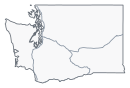
Washington has 0 agencies in the program, 0% of its local agencies.
Summary generated with PromptQL
Washington state and federal immigration authorities remain locked in a contentious standoff as local agencies move to sever data-sharing pipelines and logistical support for ICE. The state's strict sanctuary policies, which tightly restrict 287(g) partnerships and limit ICE's formal footprint to 0 participating agencies statewide, have prompted federal lawsuits and ongoing friction over courthouse arrests and agents' use of facial coverings.
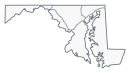
Maryland has 0 agencies in the program, 0% of its local agencies.
Summary generated with PromptQL
Maryland enacted the Community Trust Act to ban 287(g) agreements and restrict local law enforcement from assisting federal immigration agents, prompting the state's participating counties to sever their active ICE partnerships. The statewide limits on ICE cooperation have since triggered major legal battles, with both the U.S. Department of Justice and a coalition of 17 Republican county sheriffs suing the state to overturn the new restrictions.
Oregon has 0 agencies in the program, 0% of its local agencies.
Summary generated with PromptQL
Tensions over immigration enforcement in Oregon are escalating as local and state officials clash over the state's sanctuary laws and cooperation with federal authorities. While the state government faces a federal lawsuit for refusing to issue covert license plates to federal agents, Douglas County has openly rejected state sanctuary policies and pledged full cooperation with Immigration and Customs Enforcement.
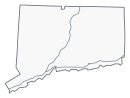
Connecticut has 0 agencies in the program, 0% of its local agencies.
Summary generated with PromptQL
Connecticut actively reinforced its sanctuary policies last year by passing an expanded Trust Act and enacting strict courthouse rules to further limit local law enforcement cooperation with federal immigration authorities. As ICE lists 0 participating 287(g) agencies in the state—the 41st such total in the country—state and municipal leaders have continued to develop operational safeguards and civil liability proposals to minimize local police involvement in deportations.
Hawaii has 0 agencies in the program, 0% of its local agencies.
Summary generated with PromptQL
Following revelations of unpublicized local 287(g) agreements with federal immigration authorities, Hawaii enacted landmark statewide legislation to restrict local law enforcement cooperation with ICE. The new legal protections cap over a year of sustained pushback by immigrant advocates and localities, highlighted by Maui's push to sever its ties with federal enforcement programs.
Maine has 0 agencies in the program, 0% of its local agencies.
Summary generated with PromptQL
After the Wells Police Department signed Maine's first 287(g) agreement with ICE last year, several other localities and state officials moved to restrict local cooperation with federal immigration agents. Earlier this year, Governor Janet Mills refused to issue covert state license plates for ICE vehicles, and the city of Waterville formally banned its police and municipal employees from assisting in federal enforcement.
Rhode Island has 0 agencies in the program, 0% of its local agencies.
Summary generated with PromptQL
Rhode Island leaders have established new statutory protections against federal immigration enforcement and mounted legal challenges to prevent the federal government from conditioning state grants on local ICE cooperation. The statewide measures formally restrict immigration arrests at local courthouses and polling places, while the attorney general is leading a multistate coalition fighting forced compliance mandates in federal court.
Delaware has 0 agencies in the program, 0% of its local agencies.
Summary generated with PromptQL
Last year, Delaware enacted legislation banning local law enforcement agencies from entering into 287(g) agreements with federal immigration authorities. The statewide prohibition followed swift community backlash against a brief partnership in the town of Camden, shutting down federal efforts to recruit local departments and leaving ICE with 0 active agreements in the state.
District of Columbia has 0 agencies in the program, 0% of its local agencies.
Summary generated with PromptQL
ICE lists 0 participating agencies in the District of Columbia under 0 287(g) agreements, though the local government officially operates as a sanctuary jurisdiction that rejects federal immigration detainers. Despite criticism and funding threats from federal authorities over that stance, the Metropolitan Police Department enacted a policy last year that permits local officers to share information with federal immigration agents.
Vermont has 0 agencies in the program, 0% of its local agencies.
Summary generated with PromptQL
Vermont law enforcement agencies maintain 0 active 287(g) agreements with U.S. Immigration and Customs Enforcement, leaving the state without any local police departments formally deputized to perform federal immigration duties. While the state lacks formal federal partnerships, local authorities still occasionally intersect with federal immigration operations, such as when state police were deployed to clear demonstrators blocking an ICE workspace in July.